Development
·
2026
Common Hours
A small scheduling interface that explores how people might compare possible meeting times without turning a simple decision into a complicated dashboard.
Prototype study
Role
Interaction design and front-end prototyping
Format
Interface prototype
Deliverables
Time-selection flow, responsive interface, state inventory
Credits
Fictional prototype narrative by Mira Veylen. Interface artwork created for this demo.
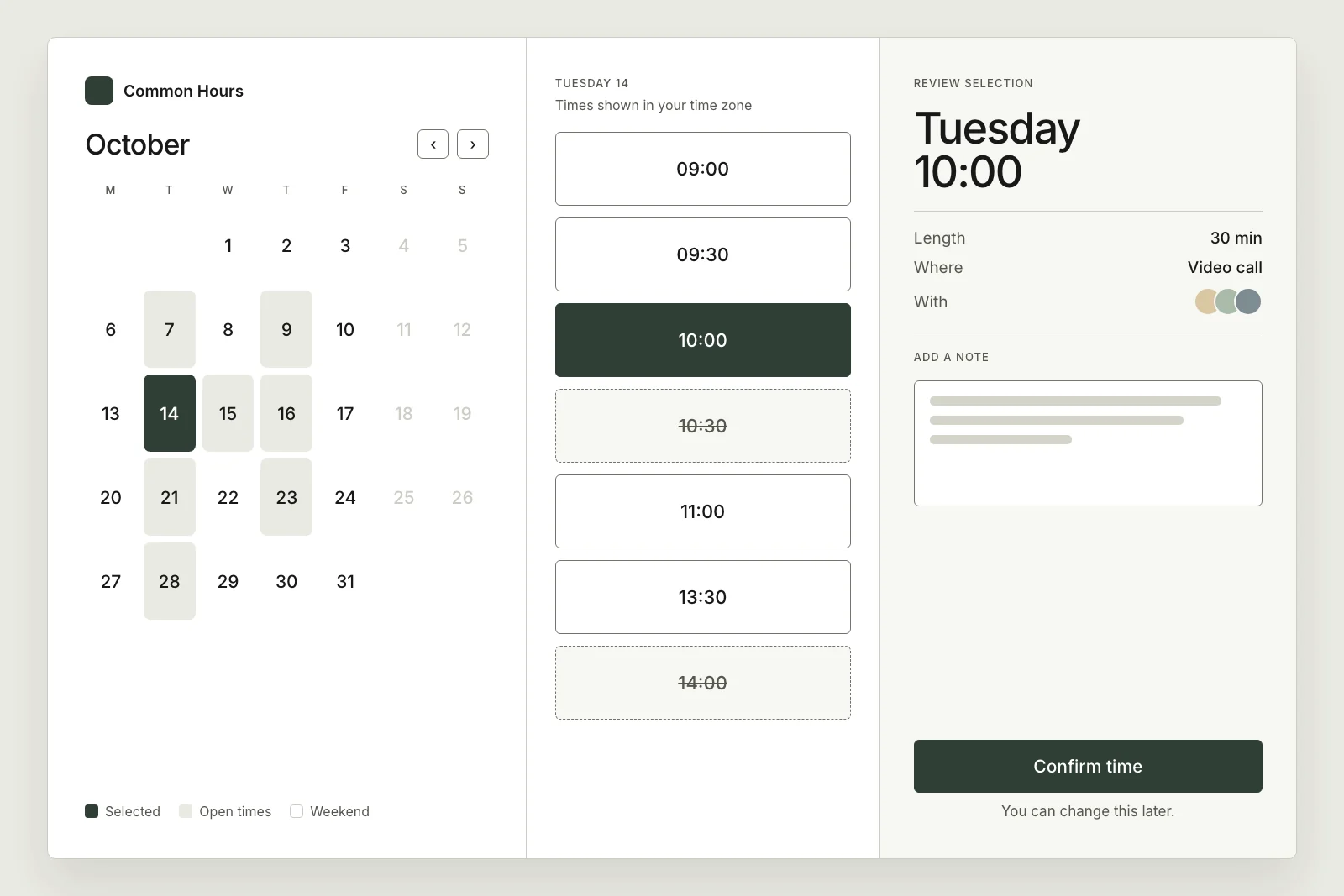
A scheduling-interface study; the pictured controls are illustrative.
The brief
The idea began with a narrow question: how could a person suggest a few possible times and understand what happens next? I kept the concept focused on choosing and reviewing options rather than adding a calendar, account system, or team dashboard.
The portfolio presents an interface study. It does not include a working booking service or claim an integration with a calendar provider.
The approach
I separated the flow into choosing a day, choosing a time, and reviewing the selection. Each stage has an explicit label. An unavailable option stays understandable as text rather than disappearing without explanation.
The proposed interaction uses ordinary buttons and form controls. Keyboard focus follows the visible order, and the summary does not depend on color alone. On mobile, the summary follows the choices instead of occupying a fixed panel beside them.
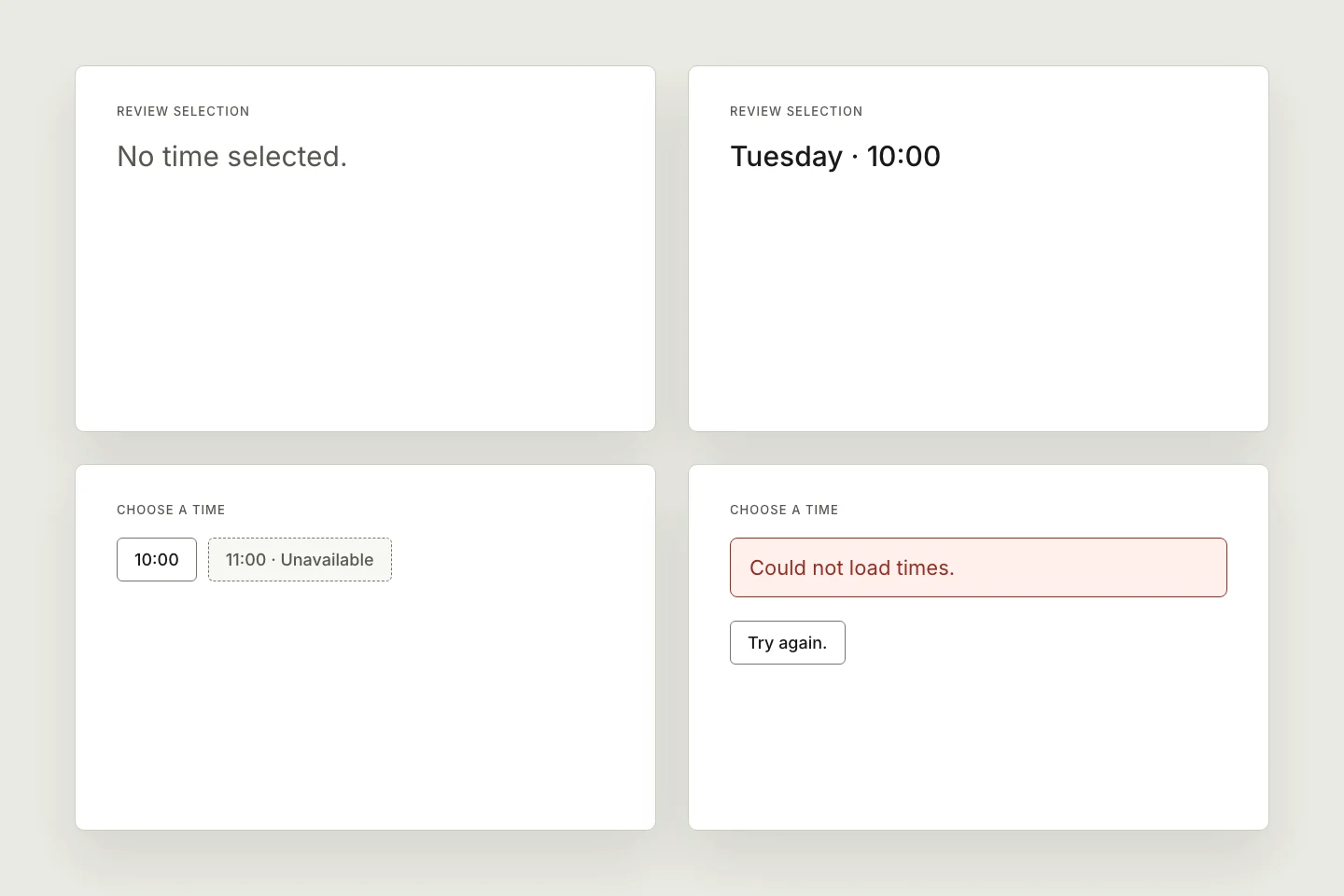
Distinct states explain what can be selected and what needs attention.
A closer look
The interface artwork uses “Choose a day,” “Choose a time,” and “Review selection” as its main labels. An empty selection reads “No time selected.” A filled state reads “Tuesday · 10:00,” and an unavailable option is labeled “Unavailable.” These are example interface values, not an appointment offer.
The state inventory includes no selection, a valid selection, an unavailable time, and a recoverable error. Keeping those states together makes the intended behavior easier to discuss before a backend is introduced.
What I would explore next
The next step would be to validate timezone handling and conflict resolution with a real scheduling system. Until then, the study should be judged as an interface direction, not as evidence of a reliable booking product.
Next project
After the Rain
Let’s talk about your project.
If this approach feels right for what you’re making, I’d like to hear more.