Design
·
2025
Object Notes
An editorial catalog concept for everyday objects, where a clear description and a considered image matter more than promotional badges or shopping prompts.
Self-initiated concept
Role
Visual direction and interface design
Format
Catalog concept
Deliverables
Catalog layout, object-page study, content hierarchy
Credits
Fictional catalog concept by Mira Veylen. Interface artwork created for this demo; still-life reference licensed from Unsplash.
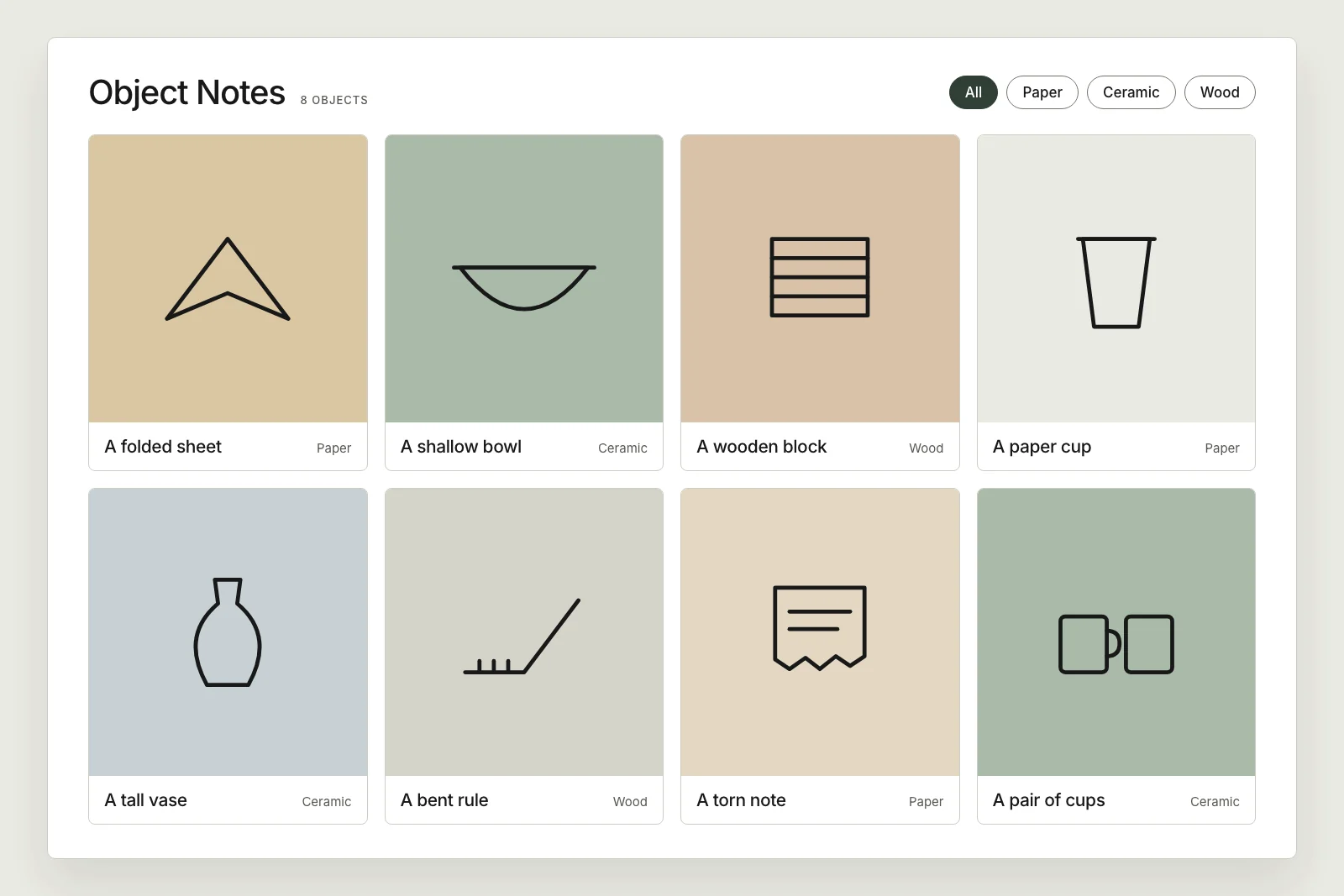
A fictional catalog interface with no checkout or products for sale.
The brief
Object Notes imagines a collection of ordinary objects described with care. The aim was to let a reader understand material, shape, and use without making the page feel like a store.
There is no commercial catalog behind the concept. Product prices, stock notices, purchase controls, and customer reviews are intentionally absent.
The approach
I used a repeatable structure: a plain object title, a brief observation, an image, and a longer note. The index supports quick browsing, while the object page gives the description more space.
The design keeps labels near their values and gives captions a consistent place. A single typographic system carries the hierarchy from the index into the detail page, so the reader does not have to relearn the interface.
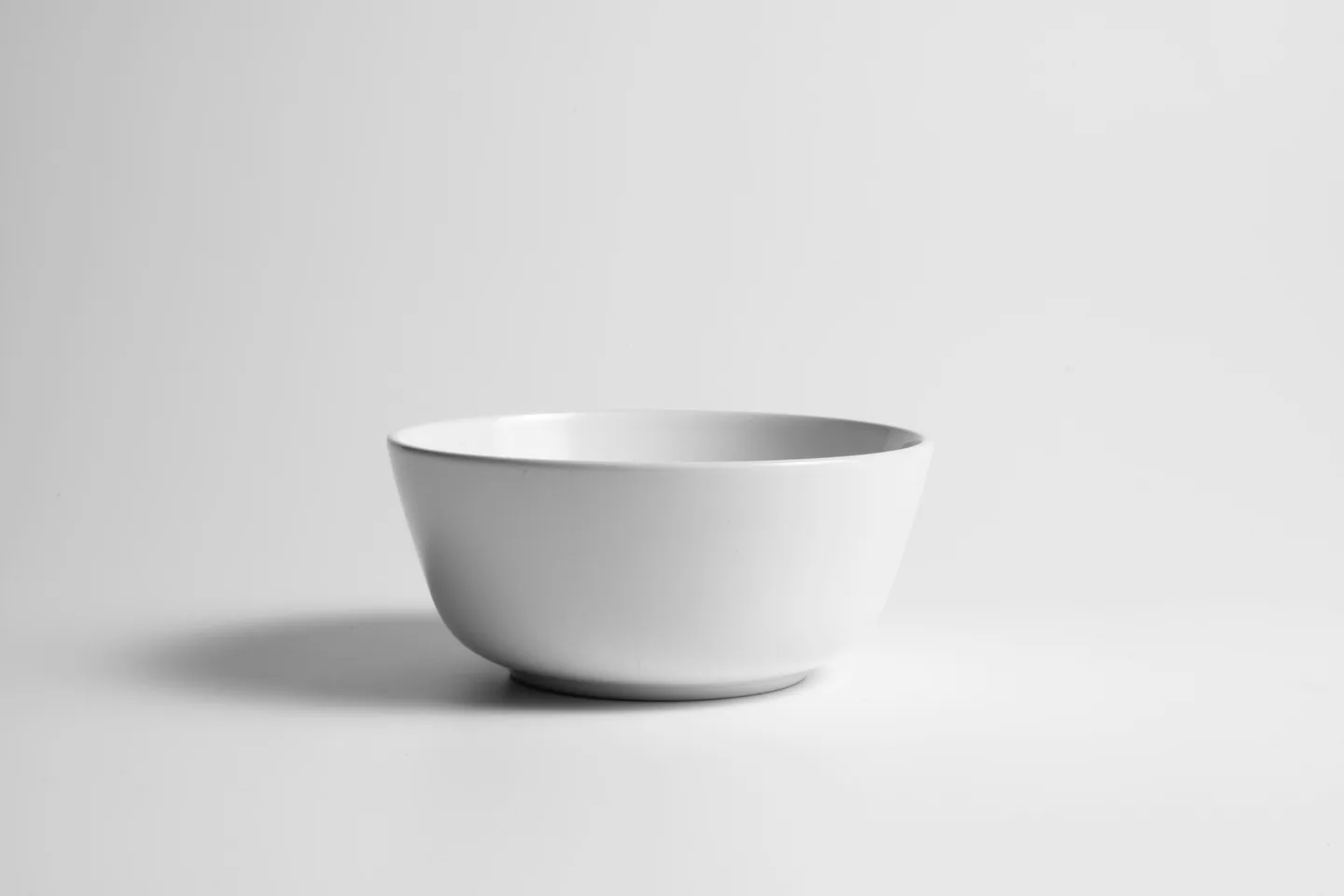
Licensed stock reference for the object-page art direction.
A closer look
The interface artwork contains the entries “A folded sheet,” “A shallow bowl,” and “A wooden block.” Their accompanying observations are “A line becomes a structure,” “A small space for an everyday object,” and “Weight, grain, and a simple edge.” They are fictional editorial entries rather than named products.
The separate still-life image is a stock reference for tone and lighting. It is not presented as an object designed, manufactured, or photographed by the portfolio owner.
What I would explore next
I would next work with a real collection to see whether the structure can accommodate irregular dimensions, longer descriptions, and less controlled photography. The concept currently demonstrates a visual system, not a catalog management product.
Next project
Pocket Index
Let’s talk about your project.
If this approach feels right for what you’re making, I’d like to hear more.